Download
This study examines the increasing impact of automation and artificial intelligence (AI) on employment patterns in Pakistan's major economic sectors, such as manufacturing, agriculture, logistics, energy, construction, and services. As labour-intensive sectors make up the backbone of Pakistan's economy, AI adoption presents…
Download
Using a sectorally disaggregated Computable General Equilibrium (CGE) model, inclusive of direct cost estimates for military assets, infrastructure damage, disrupted trade and service sector impacts, this study estimates that India's economy incurred at least $88.712 billion in realized losses over the four-day…
Download
This Paper explores the significance of industrial structural output for Pakistan’s economy focusing on GDP analysis. This may be about the mixed fortunes of the industrial sector, where sub-sectors like small-scale manufacturing and construction are relatively healthy whereas Large-scale manufacturing and…
Download
Tariff rationalisation is crucial for Pakistan's economic transformation, promoting export competitiveness, industrial efficiency, and trade integration. Pakistan's overdependence on high tariffs as a source of revenue has resulted in an anti-export bias, increasing the cost of production, deterring foreign investment, and…
Download
Pakistan’s Federal Board of Revenue (FBR) faces persistent challenges in tax collection, with the country's tax-to-GDP ratio stagnating at 10%—well below the global average of 15–20%. This shortfall is worsened by a largely informal economy (comprising nearly 70% of economic activity), widespread…
Download
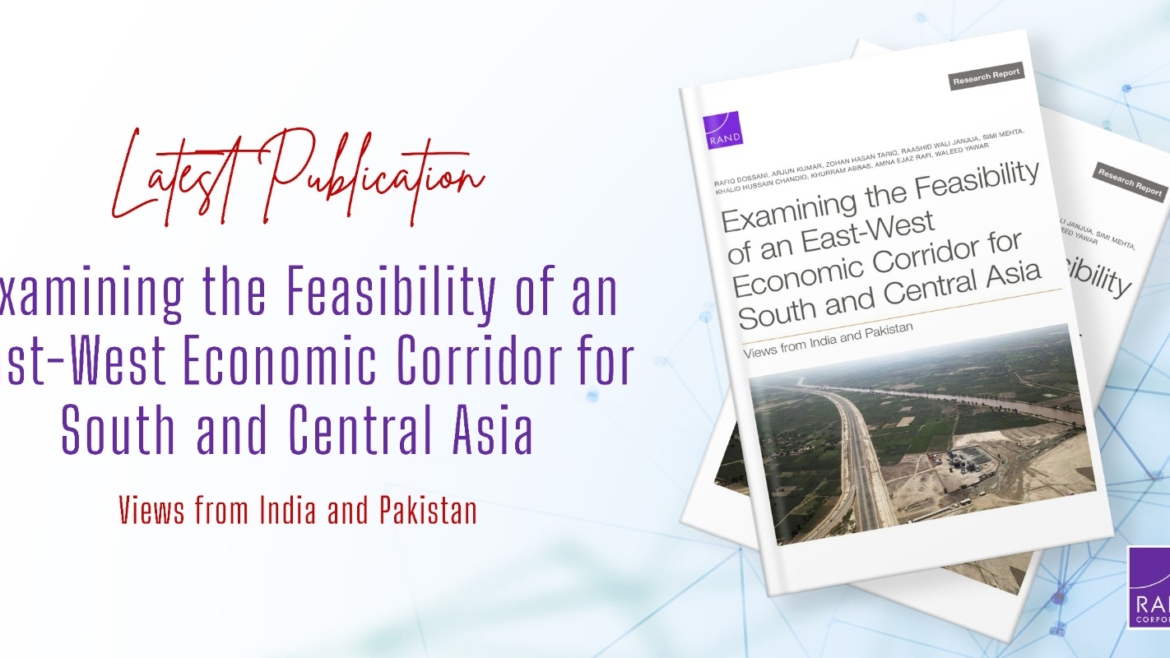
In this exploratory report, the authors ask whether an East-West Economic Corridor (EWEC) linking Afghanistan, the Central Asian republics (Kazakhstan, Kyrgyzstan, Tajikistan, Turkmenistan, and Uzbekistan), India, Iran, and Pakistan is feasible. Earlier efforts to develop economic corridors in this region have failed.…
Download
This paper explores the transformative capability of Artificial Intelligence in modernising public governance, focusing on its role in overcoming operational inefficiencies in government offices in Pakistan. The potential of AI in bringing about efficiency, reducing costs, and improving service delivery is illustrated…
Download
Pakistan’s efforts to reduce poverty over the years have been reversed by COVID-19, introducing a new group of impoverished individuals classified as “New Poor, the segment of the population expected to become non-poor before COVID-19”. These individuals or households who previously maintained…
Download
Download
This paper explores the transformative potential of Frugal innovation in addressing Pakistan's socio-economic challenges. Frugal innovation, an indigenous approach characterised by resourcefulness and innovation, leverages limited resources to create cost-effective solutions. This method is particularly relevant for Pakistan, where a significant portion…