Skip to content Skip to footer

Bangladesh: Elections and Beyond

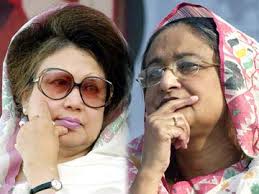
Bangladesh’s general election held on January 5, present an interesting case study. The vote’s credibility had been undermined even before the polling day, as 153 Awami League (AL) members or its allies were declared elected unopposed to a house having 300 elected members.
Read More »

Bangladesh: Bloody Victory Day

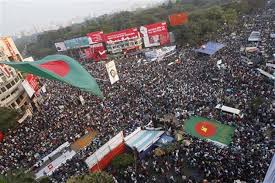
This year, people of Bangladesh greeted their Victory day in an environment of country-wide violence in the wake of execution of Adul Qader Molla. Since independence in 1971, people of Bangladesh are unable to find psychological or emotional “closure” on the violent

Read More »

An Essay on Why Multinational Corporations are Leaving Pakistan

This study explores the underlying factors behind the exit of multinational corporations (MNCs) from Pakistan and examines how macroeconomic volatility, regulatory uncertainty, and changing global corporate strategies influence this trend. Using firm-level data from the PSX and official statistics from the SBP,

Read More »

Pahalgam, Operation Sindoor and Marka-e-Haq

Since 1776, Adam Smith’s theory of absolute advantage has remained central to modern economic thought on international trade. Over time, however, its universal validity has been increasingly contested due to recurring trade imbalances, asymmetrical distribution of trade gains across nations, and instances

Read More »

Why Pakistani Dramas Deserve A Global Stage

Pakistani dramas’ content quality, along with good dialogue delivery, makes them unparalleled. The Pakistani dramas have contributed significantly to Pakistan’s positive image projection. The subjects showcased in dramas shed light on a wide range of genres, including family, comedy, history, and social

Read More »

South Asia’s Prospective Future

Why South Asia has (so far) failed to emerge as an economically integrated bloc like ASEAN. Pakistan and India are the two major countries in region. India has expanded trans-regionally to East Asia; the South Asian country has political ties with ASEAN

Read More »

From Vishwamitra to Nirmitra: How India Lost the Plot

The so-called ‘non-alignment’ mantra of India during the Cold War era was a farce to begin with, but more recently, it has openly pivoted towards hard hedging, the core principle of which is to both engage and resist. India was trying to act smart by playing both sides of the fence and finally got exposed.

Read More »

IPRI

IPRI is one of the oldest non-partisan think-tanks on all facets of National Security including international relations & law, strategic studies, governance & public policy and economic security in Pakistan. Established in 1999, IPRI is affiliated with the National Security Division (NSD), Government of Pakistan.

Contact

 Office 505, 5th Floor, Evacuee Trust Complex, Sir Agha Khan Road, F-5/1, Islamabad, Pakistan

  ipripak@ipripak.org

  +92 51 9211346-9

  +92 51 9211350

Subscribe

To receive email updates on new products and announcements